
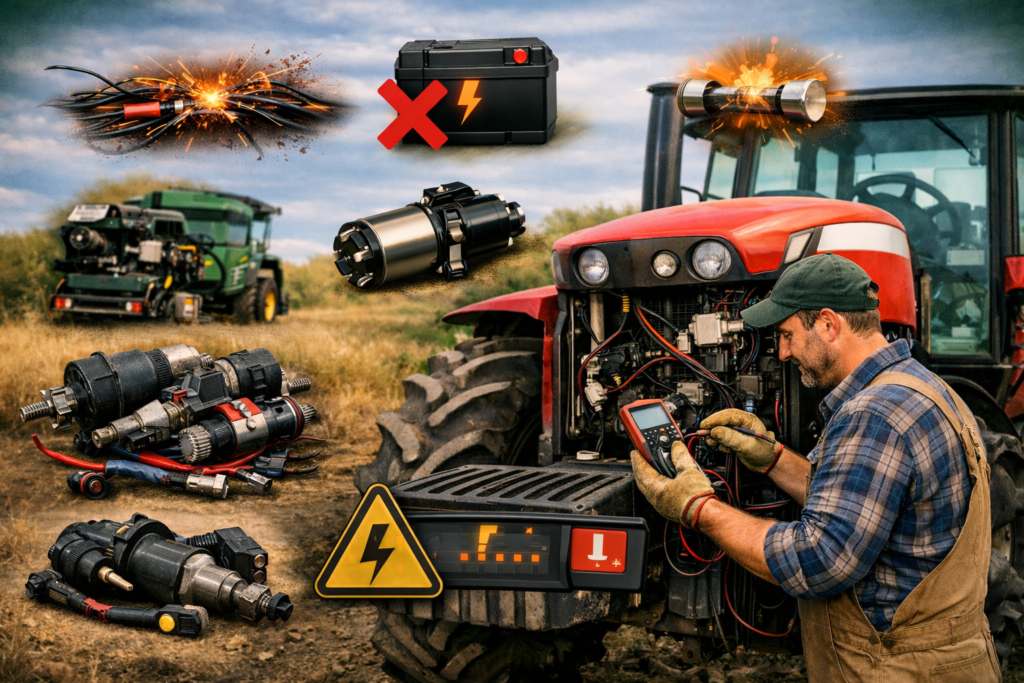
Modern farming depends heavily on reliable agricultural machinery. From tractors and harvesters to irrigation systems and balers, electrical systems play a vital role in keeping equipment running efficiently. When electrical problems occur, they can lead to costly downtime, delayed harvesting, and expensive repairs.
At T.M.C Auto Electrical, we understand how important dependable machinery is for agricultural operations. Here are some of the most common electrical issues farmers experience with agricultural machinery — and how to prevent them.
1. Battery Failures
One of the most common electrical problems in agricultural equipment is battery failure. Harsh weather conditions, long operating hours, and periods of inactivity can all affect battery performance.
Common signs include:
-
Difficulty starting machinery
-
Dim lights or weak electrical accessories
-
Frequent battery drain
-
Corroded battery terminals
Regular battery testing and terminal cleaning can help extend battery life and reduce unexpected breakdowns.
2. Alternator Problems
The alternator keeps the battery charged and powers the electrical systems while machinery is running. If the alternator fails, the battery will quickly lose charge, causing the machine to stop operating.
Common causes of alternator failure:
-
Worn bearings
-
Loose or damaged belts
-
Faulty brushes or slip rings
-
Dirt and moisture contamination
Early warning signs often include flickering lights, warning indicators, or unusual noises coming from the alternator.
3. Damaged Wiring and Loose Connections
Agricultural machinery operates in tough environments filled with dust, mud, moisture, vibration, and heat. Over time, wiring harnesses and electrical connectors can become damaged or loose.
This may result in:
-
Intermittent electrical faults
-
Sensors malfunctioning
-
Equipment randomly shutting down
-
Short circuits or blown fuses
Loose wiring is especially common in machinery that operates over rough terrain daily. Regular inspections can help identify worn cables before they fail completely.
4. Corrosion and Moisture Damage
Moisture is one of the biggest enemies of agricultural electrical systems. Rain, irrigation water, pressure washing, and humidity can all lead to corrosion inside connectors and control modules.
Corrosion can cause:
-
Poor electrical conductivity
-
Sensor errors
-
Starting problems
-
Permanent ECU or module damage
Protective seals, waterproof connectors, and routine maintenance are essential for preventing moisture-related failures.
5. Faulty Sensors and Electronic Control Units (ECUs)
Modern agricultural machinery relies heavily on electronic sensors and computer-controlled systems. Faulty sensors can trigger warning lights, reduce engine performance, or stop machinery from operating correctly.
Common sensor-related issues include:
-
Incorrect temperature readings
-
Fuel system errors
-
Transmission faults
-
Hydraulic control problems
In many cases, professional diagnostic equipment is needed to accurately identify the faulty component.
6. Blown Fuses and Electrical Overloads
Agricultural equipment often powers multiple electrical accessories at once, including GPS systems, lighting, pumps, and control units. Overloaded circuits can lead to blown fuses or damaged wiring.
Common causes include:
-
Incorrect fuse sizes
-
Too many accessories on one circuit
-
Short circuits
-
Faulty components drawing excessive power
Ignoring repeated fuse failures can lead to larger electrical system damage over time.
7. Poor Grounding
Grounding issues are often overlooked but can create major electrical problems in farming equipment. Poor grounding can lead to voltage fluctuations, electronic interference, and unreliable machinery performance.
Symptoms may include:
-
Random electrical faults
-
Unstable sensor readings
-
Starting issues
-
Electronic control failures
Ensuring all grounding points are clean and secure is critical for modern machinery.
Preventative Maintenance is Key
Electrical failures rarely happen without warning. Regular inspections and preventative maintenance can significantly reduce downtime and repair costs.
Recommended maintenance practices:
-
Inspect batteries and charging systems regularly
-
Check wiring harnesses for wear and damage
-
Clean electrical connectors and terminals
-
Protect components from moisture and dirt
-
Test charging and starting systems routinely
-
Address warning lights immediately
Keeping agricultural machinery in peak condition ensures better productivity, reliability, and safety during critical farming seasons.
Professional Auto Electrical Services You Can Trust
When electrical problems affect your agricultural machinery, fast and accurate diagnostics are essential. At T.M.C Auto Electrical, we provide professional auto electrical services to help keep your equipment operating reliably and efficiently.
Whether you need battery testing, alternator repairs, wiring diagnostics, or complete electrical fault finding, our experienced team is ready to assist.
Contact T.M.C Auto Electrical today for expert agricultural machinery electrical solutions.
 Visit: www.tmcauto.co.za
 Find us at: 216 Hendrik Verwoerd Street, Nigel
 Call/WhatsApp: 060 671 9767
 juandre@autotmc.co.za