
Pre-Road-Trip Electrical Checks for a Safer South African Journey
Before a long-distance drive, tyres and fluids usually get the attention. A battery, charging or wiring fault can be just as disruptive—especially when heat, traffic, lights, air-conditioning and accessories increase electrical demand.
South African holiday travel can combine long distances, hot weather, congested routes and limited repair options between towns. A vehicle that seems fine during short local trips may reveal a weak battery or charging problem when the air-conditioning, lights, navigation and phone chargers operate for hours.
A pre-trip inspection is not about replacing every older component. It is about identifying weak points while the vehicle is still at home, where a proper test and planned repair are far easier than a roadside breakdown.
Start with the battery and charging system
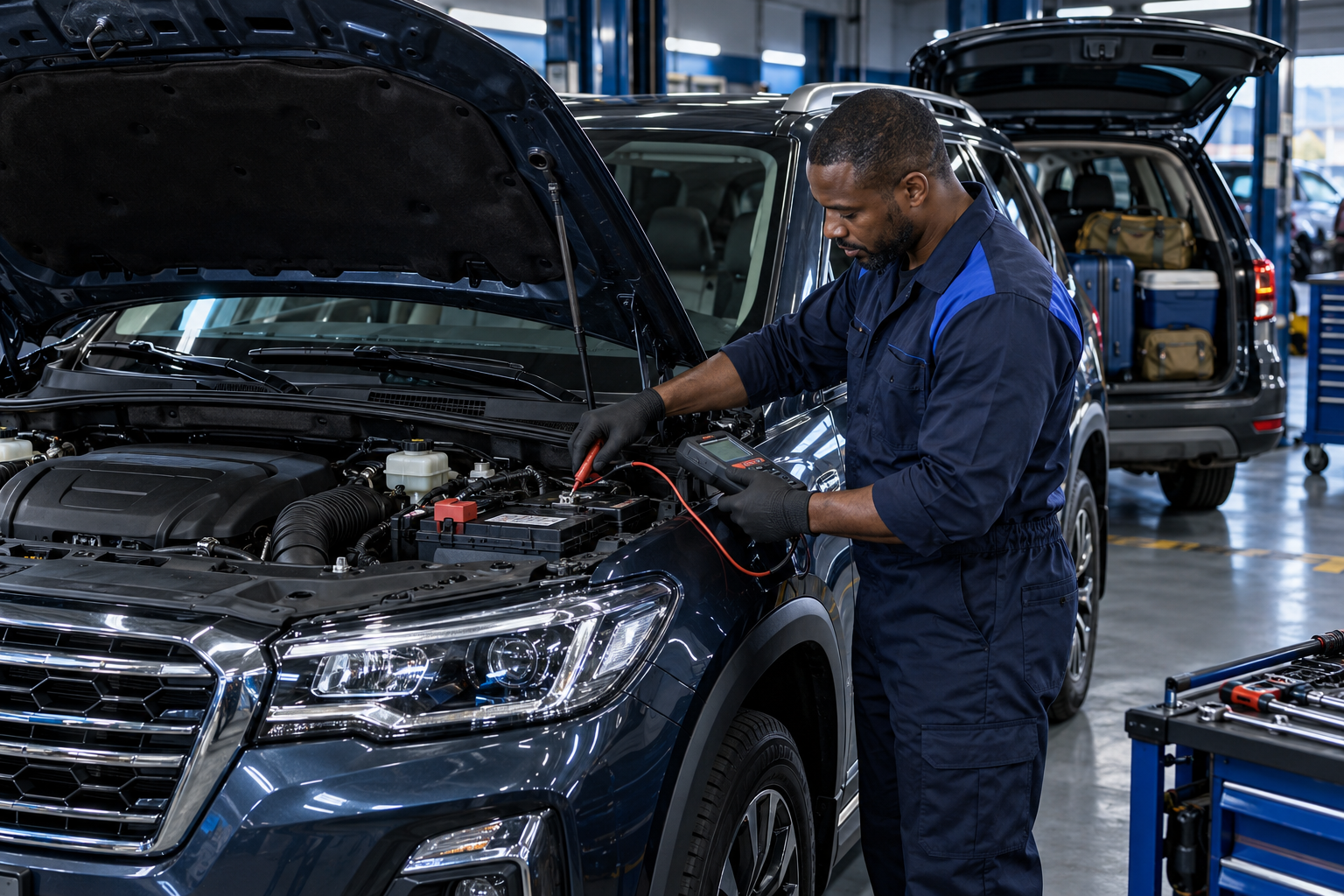
The battery must provide high current for starting, while the alternator supports the electrical system and replenishes charge once the engine runs. Both should be assessed as part of one system.
Battery capacity and connections
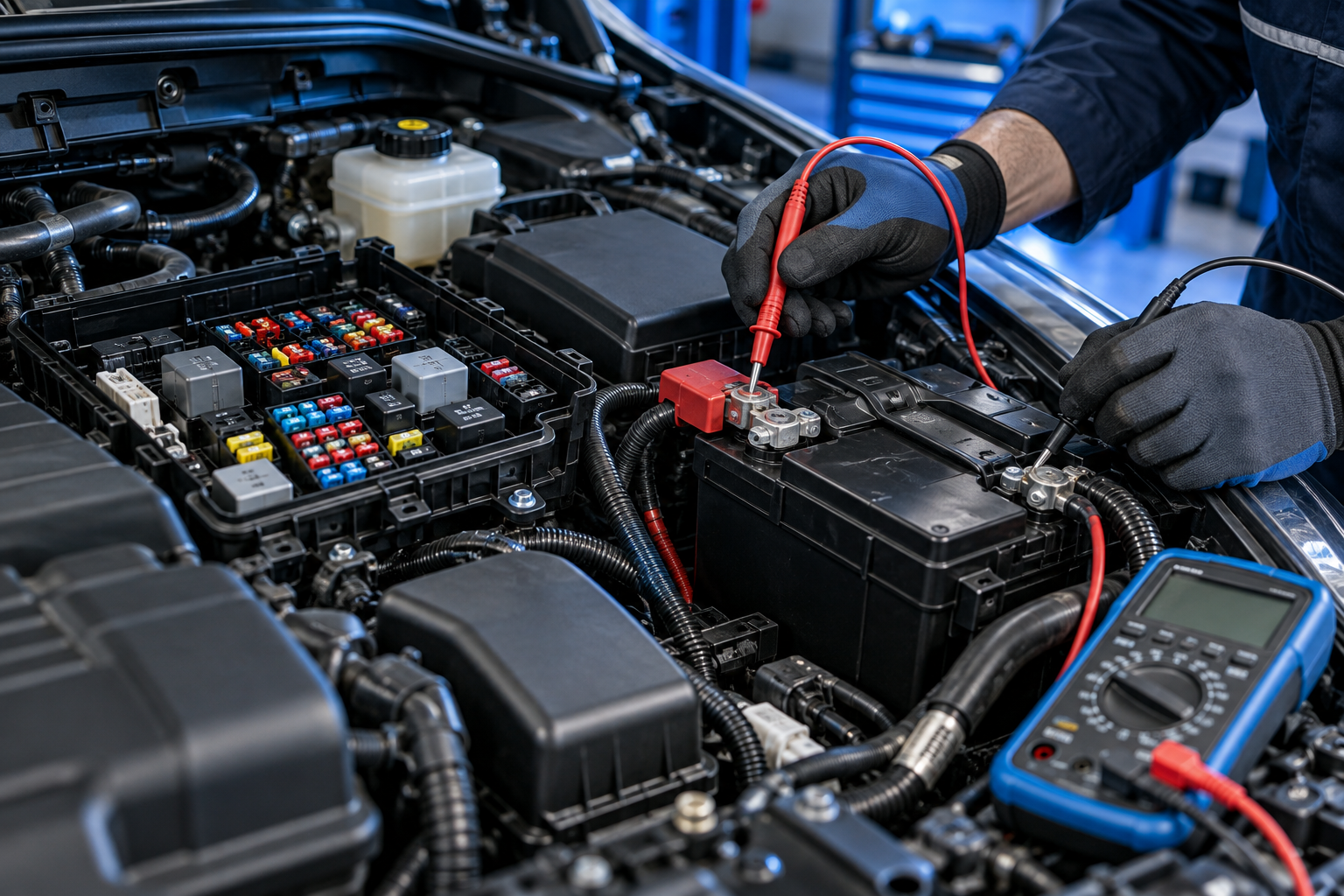
Slow cranking, clicking, corrosion or loose terminals deserve attention. A voltage reading alone may not show how the battery performs under load.
Charging output and voltage stability
Output should remain suitable as lights, fans and other consumers operate. Belt, cabling and earth paths are part of the test.
Eight practical electrical checks
1. Start the vehicle from cold
Listen for a confident, even crank. A slow or laboured start can indicate low charge, reduced battery capacity, a cable problem or starter-circuit resistance.
2. Inspect battery terminals and visible cables
Connections should be secure and free of severe corrosion. Damaged insulation, loose clamps or overheated terminals require professional attention.
3. Check every exterior light
Test headlamps, brake lights, indicators, hazards, reverse lamps and number-plate lights. Correct lighting is essential during rain, night driving and roadside emergencies.
4. Test wipers, washers and demisting
Visibility systems depend on electrical motors, switches, relays and heating elements. Do not discover a weak wiper motor in a summer storm.
5. Confirm the air-conditioning works consistently
Cooling that fades, cycles abnormally or only works at speed may need inspection. Comfort affects driver concentration during long, hot journeys.
6. Test charging ports and accessories
A damaged socket, unsuitable adaptor or poorly fitted accessory can blow fuses or drain the battery. Test navigation, dash cameras and phone chargers before departure.
7. Inspect trailer plugs and auxiliary wiring
If towing, check all trailer lights and the plug connection. Corrosion, poor earths and incorrect wiring are common causes of intermittent trailer-light faults.
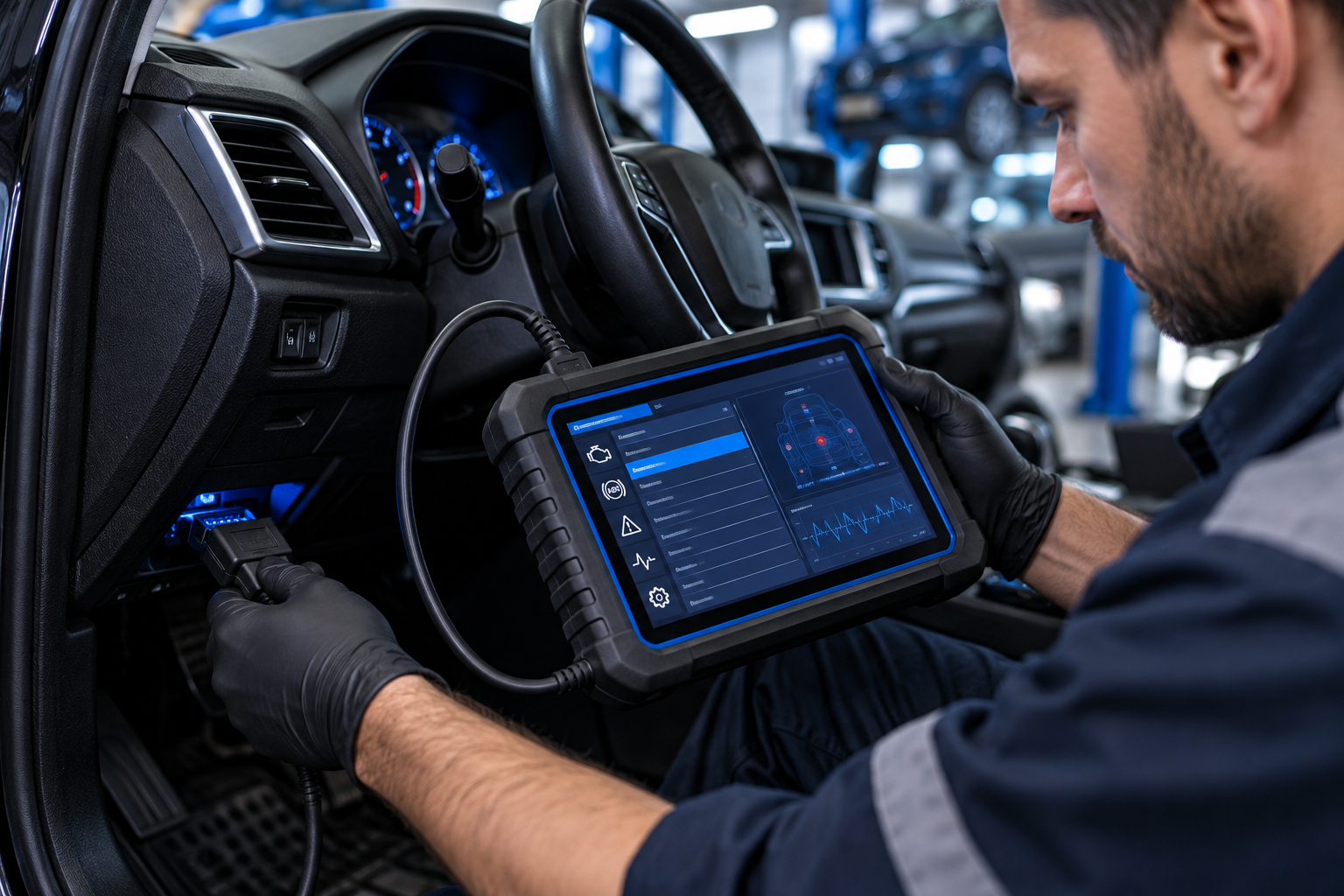
8. Pay attention to stored warnings
Even if a warning disappeared, scan results and the circumstances may reveal a fault likely to return under sustained load.
What to pack—and what not to improvise
Carry the correct emergency triangle, reflective gear, torch and vehicle-specific information. A suitable jump pack may be useful when maintained and used according to its instructions. Avoid bypassing fuses, fitting a higher-rated fuse or attempting roadside wiring repairs without the correct knowledge.
| Symptom before departure | Why it matters | Recommended action |
|---|---|---|
| Slow cranking | Starting reserve may be limited | Battery, starter circuit and connections test |
| Charging warning | Battery may not be replenished | Charging-system diagnosis before travel |
| Lights fluctuate | Voltage may be unstable | Alternator, regulator, cable and earth checks |
| Fuse blows repeatedly | A short or overload remains | Circuit fault finding—never fit a larger fuse |
| Aircon cuts out | Electrical or refrigerant-system fault possible | Professional aircon assessment |
Do not begin a long trip with an active charging fault
A vehicle may start normally yet stop once stored battery energy is depleted. If the charging light remains on, power systems fluctuate or the engine cuts out, arrange diagnosis instead of hoping the drive will recharge the battery.
Extra value for fleets and work vehicles
For fleet, commercial and agricultural vehicles, a standard pre-departure electrical checklist reduces avoidable downtime. Recording recurring bulb failures, slow starts, battery replacements and intermittent warnings can reveal a pattern before a major failure.
TMC Auto Electrical supports passenger vehicles, fleets and 12V/24V equipment with battery, starter, alternator and diagnostic testing in Nigel and surrounding East Rand areas.
Plan for the conditions on your route
A vehicle leaving Gauteng may face sustained high temperatures, mountain passes, rough roads, night driving or long sections with limited support. Those conditions can expose a marginal connection or charging system that causes no obvious trouble on short trips around town. If the journey includes a trailer, fridge, inverter, work lights or other auxiliary equipment, tell the technician so the extra electrical demand can be considered.
After repairs or a battery replacement, allow time for a proper confirmation drive before departure. Check that starting remains consistent, no warnings return, the exterior lights and trailer circuits stay reliable, and the air-conditioning performs in traffic as well as at speed.
Frequently asked questions
How soon before a trip should I check the vehicle?
Allow enough time for diagnosis and parts if a fault is found. A few days before departure is more useful than the evening before.
Does a new battery guarantee reliable starting?
No. Charging faults, parasitic drain, poor connections and starter problems can affect a new battery.
Should I disconnect the battery to reset warnings?
No. That can erase useful diagnostic information and may affect vehicle settings. Have the fault assessed properly.
Can TMC inspect fleet vehicles?
Yes. TMC provides electrical diagnostics, repairs and fleet support for 12V and 24V vehicles.
Get the fault tested before it becomes a breakdown.
For professional diagnostics and auto electrical repairs in Nigel, Springs, Heidelberg, the East Rand and surrounding areas, contact TMC Auto Electrical.
Call: 060 671 9767
Email: juandre@tmcauto.co.za
Workshop: 216 Hendrik Verwoerd Street, Nigel