
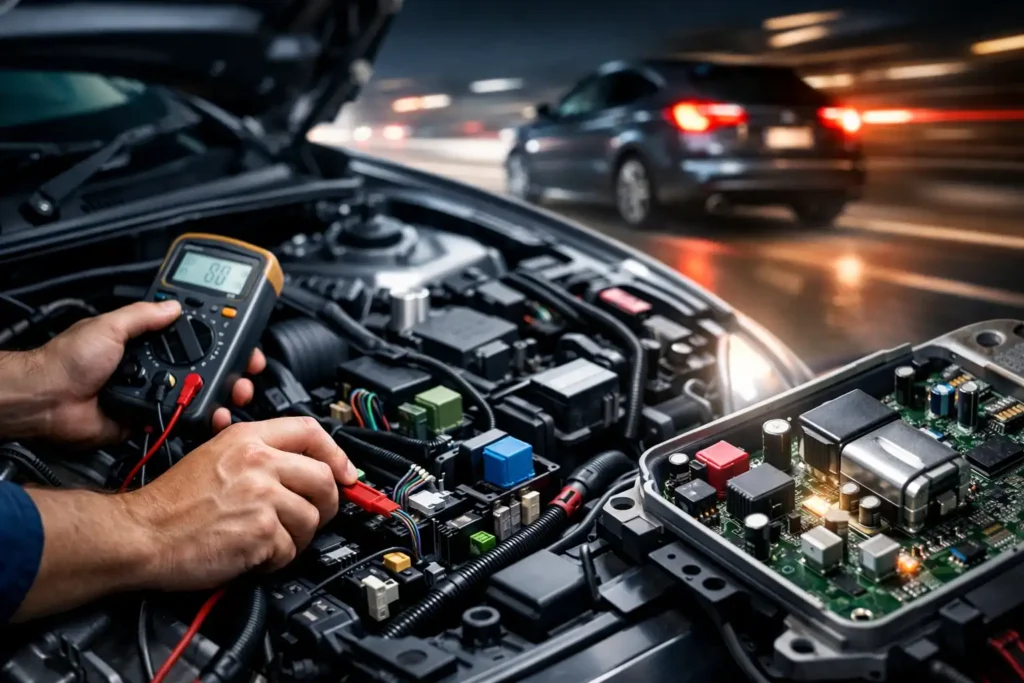
When most people think about vehicle performance, they focus on the engine, tyres or suspension. However, many of the systems that keep your vehicle running smoothly depend on the quality of its electrical components.
From the battery and alternator to sensors, wiring and relays, every electrical part plays a role in how efficiently your vehicle starts, drives and performs. Choosing poor-quality replacement parts may save money initially, but it often leads to repeated breakdowns, poor fuel economy, electrical faults and expensive repairs.
At TMC Auto Electrical, we regularly diagnose vehicles with recurring electrical problems caused by inferior replacement parts. Whether you drive a family car, bakkie, SUV, commercial vehicle or fleet vehicle around Nigel, Springs, Johannesburg and the East Rand, investing in quality electrical components helps protect your vehicle and your wallet.
Why Quality Electrical Parts Matter
Modern vehicles rely heavily on electronics.
Even a small electrical component communicates with several systems through the vehicle’s onboard computer. If one part produces inconsistent voltage or incorrect readings, it can affect multiple systems throughout the vehicle.
Quality electrical components provide:
- Stable electrical output
- Longer service life
- Better fuel efficiency
- Reliable starting
- Improved charging performance
- Reduced breakdown risk
- Accurate sensor communication
- Greater overall reliability
Cheap aftermarket components often fail to meet manufacturer specifications, creating problems that appear unrelated but all originate from poor electrical performance.
The Hidden Cost of Cheap Electrical Parts
Many drivers choose the cheapest replacement battery, alternator or sensor available.
Unfortunately, low-quality parts often result in:
Repeated Repairs
Cheap components frequently fail much sooner than genuine or premium aftermarket parts.
Replacing the same part twice costs more than fitting a quality component the first time.
Electrical System Damage
Poor-quality voltage regulators, alternators or batteries can produce unstable voltage.
This may damage:
- Engine Control Unit (ECU)
- Infotainment systems
- Vehicle sensors
- ABS modules
- Airbag systems
- Electronic steering components
One faulty electrical part can create thousands of rands in additional repairs.
How Poor-Quality Batteries Affect Vehicle Performance
The battery does far more than start your vehicle.
It also stabilises electrical voltage while powering numerous electronic systems.
Inferior batteries often suffer from:
- Low cold cranking power
- Reduced reserve capacity
- Internal plate failure
- Poor vibration resistance
- Shorter lifespan
In Johannesburg’s heavy traffic, vehicles spend significant time idling while electrical accessories continue drawing power.
A low-quality battery struggles under these conditions, especially during hot summer months.
Why Alternator Quality Is Critical
The alternator charges your battery while supplying electricity to every electrical component.
A poor-quality alternator may:
- Undercharge the battery
- Overcharge the battery
- Produce unstable voltage
- Damage sensitive electronics
- Reduce battery life
Symptoms may include:
Battery warning light
The charging system may no longer maintain correct voltage.
Dim headlights
Voltage drops become noticeable when using electrical accessories.
Slow engine cranking
An underperforming alternator gradually weakens the battery.
Random electronic faults
Voltage fluctuations confuse vehicle computers and sensors.
Wiring Quality Makes a Bigger Difference Than Most Drivers Realise
Vehicle wiring operates in extreme conditions.
It experiences:
- Engine heat
- Constant vibration
- Moisture
- Oil contamination
- Dust
- Road debris
Low-quality wiring repairs often use:
- Incorrect wire gauge
- Poor insulation
- Inferior connectors
- Weak crimp joints
These shortcuts create:
- Voltage drops
- Short circuits
- Intermittent faults
- Increased fire risk
Professional wiring repairs restore the system using automotive-grade materials designed for long-term reliability.
Sensors Depend on Stable Electrical Signals
Modern vehicles contain dozens of sensors monitoring everything from engine timing to emissions.
Examples include:
- Oxygen sensors
- Crankshaft sensors
- Camshaft sensors
- Mass airflow sensors
- Coolant temperature sensors
- Wheel speed sensors
Poor-quality replacement sensors often produce inaccurate readings.
This may lead to:
- Increased fuel consumption
- Rough idling
- Poor acceleration
- Engine warning lights
- Failed emissions testing
- Reduced engine performance
ECU Performance Starts with Reliable Electrical Components
Your Engine Control Unit (ECU) is the vehicle’s brain.
It relies on clean, consistent electrical signals.
Poor electrical parts can create:
- Communication faults
- False diagnostic trouble codes
- Limp mode activation
- Intermittent engine faults
- Starting problems
Many drivers mistakenly replace expensive ECUs when the real problem is poor battery voltage or unstable alternator output.
Professional diagnostics identify the actual cause before unnecessary parts are replaced.
How Johannesburg Driving Conditions Increase Electrical Wear
Daily driving around Johannesburg and Gauteng places additional stress on vehicle electrical systems.
Common conditions include:
Stop-start traffic
Frequent starting places extra demand on batteries and starter motors.
Summer heat
High temperatures accelerate battery deterioration and wiring insulation breakdown.
Heavy rain
Moisture enters damaged connectors, causing corrosion and electrical shorts.
Potholes
Constant vibration loosens connectors and damages wiring harnesses.
Long-distance travel
Drivers travelling between Gauteng provinces rely heavily on dependable charging systems to avoid roadside breakdowns.
Commercial Vehicles Need Even Better Electrical Reliability
Fleet vehicles often operate for long hours every day.
Downtime costs businesses money.
Reliable electrical components reduce:
- Missed deliveries
- Emergency callouts
- Driver delays
- Fuel wastage
- Unexpected repairs
Preventative electrical inspections help identify ageing batteries, worn alternators and wiring issues before failures occur.
Warning Signs That Inferior Electrical Parts May Be Causing Problems
Watch for these symptoms:
Hard starting
Slow engine cranking may indicate battery or starter problems.
Flickering lights
Voltage instability often points to charging system faults.
Dashboard warning lights
Multiple warning lights appearing together frequently indicate electrical issues rather than several separate failures.
Battery repeatedly going flat
A quality battery should not discharge regularly without an underlying electrical fault.
Random electronic glitches
Power windows, infotainment systems or central locking may behave unpredictably when voltage fluctuates.
How Professional Diagnostics Save Money
Many electrical faults share similar symptoms.
Replacing parts based on guesswork often becomes expensive.
Professional diagnostic testing allows technicians to:
- Test battery health
- Measure charging voltage
- Check starter current draw
- Inspect wiring integrity
- Test relays and fuses
- Scan ECU fault codes
- Identify parasitic battery drains
Accurate diagnosis prevents unnecessary part replacement.
Tips for Choosing Quality Electrical Parts
Before authorising repairs, ask:
Is the replacement part manufacturer approved?
Quality brands generally meet or exceed OEM specifications.
Does the workshop test before replacing?
Diagnosis should always come before replacement.
Is there a warranty?
Reputable components typically include manufacturer warranties.
Are automotive-grade connectors being used?
Proper wiring materials significantly improve repair longevity.
Is the charging system tested after installation?
Battery replacement alone is not enough.
The charging system should always be tested.
Preventative Maintenance Reduces Unexpected Failures
Simple maintenance includes:
- Battery testing every service
- Cleaning battery terminals
- Inspecting earth connections
- Checking charging voltage
- Inspecting wiring harnesses
- Testing starter performance
- Monitoring dashboard warning lights
Routine inspections often detect problems long before complete failure occurs.
When Should You Visit an Auto Electrician?
Book an inspection if you notice:
- Difficulty starting
- Battery warning light
- Flickering headlights
- Burning electrical smell
- Battery requiring frequent jump starts
- Dashboard warning lights
- Electrical accessories malfunctioning
- Flat battery after standing overnight
Ignoring these warning signs often results in more costly repairs later
Why Choose TMC Auto Electrical?
At TMC Auto Electrical, we understand how every electrical component affects your vehicle’s overall performance.
We provide professional electrical diagnostics and repairs for customers throughout Nigel, Springs, Johannesburg, the East Rand and surrounding Gauteng areas.
Our services include:
- Battery testing and replacement
- Alternator repairs
- Starter motor repairs
- Vehicle diagnostics
- ECU diagnostics
- Wiring repairs
- Fuse and relay testing
- Commercial vehicle electrical repairs
- Fleet maintenance
- Charging system inspections
We use quality components and proven diagnostic equipment to identify faults accurately the first time.
Book a Professional Auto Electrical Inspection
Electrical problems rarely fix themselves, and poor-quality replacement parts can lead to repeated breakdowns and costly repairs. If you’ve noticed starting issues, warning lights, charging problems or other electrical faults, the experienced team at TMC Auto Electrical can accurately diagnose the issue and recommend the right solution.
Whether you’re in Nigel, Springs, Johannesburg, the East Rand or the surrounding areas, contact TMC Auto Electrical today to book a professional diagnostic inspection and keep your vehicle performing at its best.